
Visual Timers Aren’t Just for Kids — They Work for Adults Too
At Time Timer, we design visual timers for use in many different environments — including homes, schools, workplaces, and professional practices. Our approach is based on one core belief: visual time management works for people of all ages, including adults and especially neurodivergent individuals.
Although visual timers are often associated with children and classroom use, they are just as valuable for adults. Professionals, entrepreneurs, and remote workers increasingly rely on visual structure to support focus and productivity. Whether used in corporate offices, therapy rooms, or home offices, the disappearing Time Timer disk offers a clear, intuitive way to stay aware of time.

Why Adults Respond to Visual Time
The adult brain processes visual information far more quickly than text. This is one reason why seeing time physically pass can feel more immediate and motivating than reading numbers on a digital clock.
Visual tools such as dashboards, charts, and infographics are already standard in professional settings. Applying that same visual approach to time management helps turn an abstract concept into something concrete. For many adults, this makes planning, prioritising, and pacing work easier and more effective.
How Professionals Use Visual Timers
More Focused Meetings
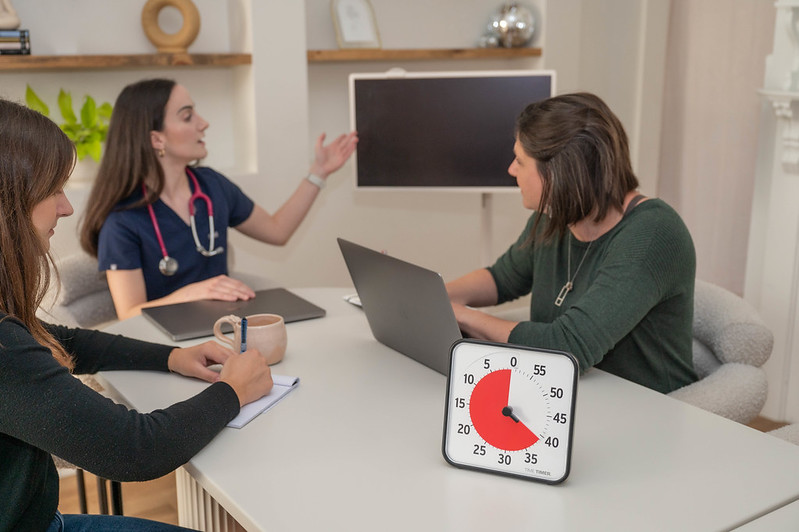
Placing a visual timer in a meeting space helps participants stay aware of time without interruptions. When time is visible, discussions are less likely to drift off-topic, encouraging clearer communication and better preparation.
Client Sessions and Consultations
Therapists, coaches, consultants, and similar professionals often use visual timers to manage session length. A visible countdown maintains boundaries without the need for awkward time reminders, keeping sessions comfortable and professional.
Project and Deadline Management
Visual timers are helpful for breaking large projects into manageable time blocks. Whether used for deep focus sessions or shorter task intervals, a visual countdown creates a sense of urgency that supports momentum and reduces procrastination.
Visual Timers and Neurodivergent Professionals
Many neurodivergent adults — including those with ADHD or autism — experience challenges with time perception and organisation. These challenges can affect productivity, transitions between tasks, and overall workplace wellbeing.
Visual timers support neurodivergent professionals by:
Using Visual Timers in Remote Work and Home Offices
Visual timers are particularly useful in flexible and remote work environments:

Choosing a Visual Timer for Professional Use
For professional use, it’s helpful to look for visual timers that offer:
Visual Time Management Beyond the Workplace
Visual timers aren’t limited to professional tasks. Many adults use them for exercise, hobbies, household projects, and personal routines. Their simplicity makes them practical tools for everyday life.
Explore the Time Timer product range to see how visual time management can support focus, structure, and productivity — at work, at home, and beyond.


